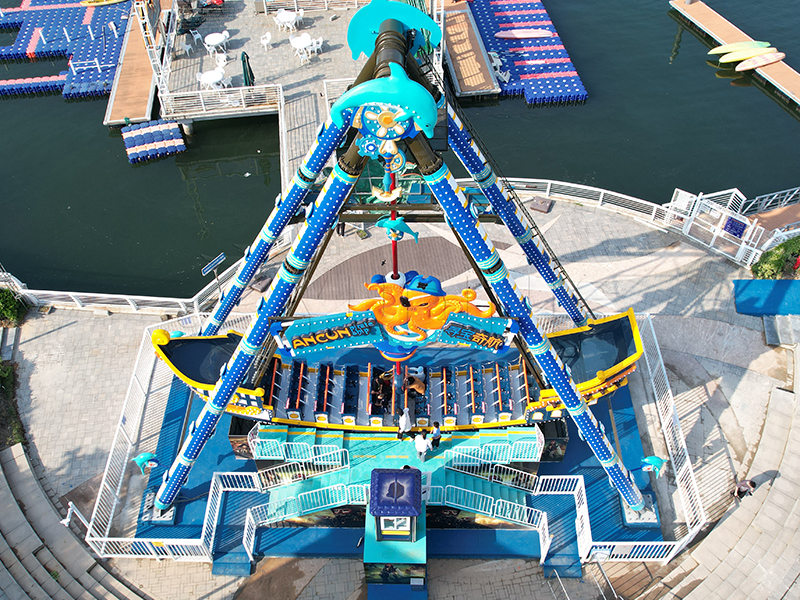
Choosing the right location is often the difference between a ride that quietly pays for itself and one that becomes the busiest corner of your park. The ocean style pirate boat ride, with its swinging motion and marine-themed design, is one of the most adaptable attractions in the amusement industry, but its performance depends heavily on where you install it. This guide helps investors and operators evaluate potential sites for an ocean style pirate boat ride, covering space requirements, guest flow, theme fit, climate, and the approval process, so you can make a confident installation decision.
Measure the Space and Safety Envelope First
Before any location decision, measure the full safety envelope, not just the ride footprint. The ocean themed swing ship is available from 24 to 70 seats, with footprints ranging from roughly 14 by 7 meters up to 22.2 by 12.6 meters, and operating heights that reach 6.7 to 17.3 meters. The swing radius and clearance height above the ride must stay completely clear of walkways, trees, structures, and power lines. A good rule is to lay out the envelope on paper or on the ground first, then add room for the queue, staff access, and maintenance clearance. For a reference on a proven mid-size layout, the classic 40-seat pirate ship specification is a practical starting point for site planning.
Place It in High-Traffic Zones
The most profitable locations put the ride where guests already gather. Entrance plazas, main walkways, food-court borders, and the area between two popular attractions all generate the daily foot traffic that a swinging ship needs to reach full capacity. A visible ride also acts as a landmark that helps visitors navigate the park and as a natural photo point that extends your marketing reach. When you choose the site, consider queue space, wheelchair access, and the direction of guest flow during peak hours so the ride never becomes a bottleneck.
Water Parks, Resorts, and Coastal Venues
The ocean theme gives you a rare advantage: it belongs in places where other rides feel out of place. Water parks, beach resorts, lakefront destinations, and coastal amusement parks can use the marine decoration as a natural extension of their environment. The fiberglass-reinforced plastic hull resists corrosion from salt air and humidity, which lowers maintenance costs in coastal climates. For operators who want to strengthen the theme further, a sea themed swing ship for theme parks can carry your own colors, logo, and lighting design to make the attraction uniquely yours.
City Parks, FECs, and Shopping Plazas
Medium and compact models with 24 to 36 seats fit well in city parks, family entertainment centers, and commercial plazas where space is tight but foot traffic is steady. These venues rarely need the tallest or largest configuration; what matters is a clean layout, a solid foundation, and access to sufficient power. For indoor or covered venues, confirm that the ceiling height clears the full swing arc and that ventilation is adequate for large groups. A well-chosen compact model in a shopping mall or plaza can become the anchor that pulls families toward the whole entertainment zone.
Climate, Weather, and Operating Conditions
Outdoor installation means the ride must handle your local climate. In rainy regions, add drainage around the foundation and choose non-slip deck materials. In hot climates, plan for shade, cooling, and regular checks of electrical components. In windy areas, review the manufacturer’s wind-speed limits and position the ride so the swing does not face prevailing gusts. The ocean theme’s bright colors and LED lighting also need periodic cleaning and inspection to stay photo-ready, so build a simple maintenance schedule into your operating plan from day one.
Permits, Inspections, and Installation Planning
Finally, confirm the legal side before you pour concrete. Check local amusement ride regulations, land-use permits, noise ordinances, and electrical inspections for your chosen site. Work with a manufacturer that provides installation guidance, a 12-month warranty, and lifetime technical support, because the quality of the foundation and installation directly affects safety and operating life. A professional supplier will also help you coordinate crane access, delivery routes, and the concrete works so the project stays on schedule.
The best location combines generous safety clearance, strong daily foot traffic, a theme that fits your venue, and manageable climate conditions. Start by reviewing the project references and layout support available from DINIS theme park projects, and study how the swinging ship ride has performed in parks around the world for decades. Once you have confirmed your site details, visit https://themeparkprojects.com/ocean-themed-swing-ship-ride/ and request a customized installation plan for your venue.
Leave a Reply