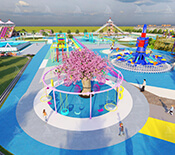
Not every profitable attraction needs a motor, a control cabinet, or a certificate for high-speed rides. Outdoor unpowered parks built from slides, climbing structures, rope courses, and themed play zones can deliver strong returns with far less complexity than mechanical rides. The question for investors is not whether unpowered play works, but when it is the better choice. This guide explains the situations where an outdoor unpowered amusement park outperforms a mechanical ride package, and when it does not.
Understand What an Unpowered Park Really Is
An unpowered park uses guest movement rather than machinery: climbing nets, tube and spiral slides, rope bridges, trampolines, water play elements, sand and sensory zones, and themed structures. Because no ride cycle, restraint system, or motor is involved, maintenance focuses on surfaces, fasteners, and inspection rather than mechanical overhaul. For investors comparing options, a non-powered amusement park investment usually means lower capital cost per square meter and a much shorter approval process.
When Unpowered Play Is the Smarter Investment
Choose unpowered attractions when your audience is mainly families with young children, when you need to fill a large site quickly, or when local regulations make mechanical rides slow and expensive to approve. Health-oriented, education-themed, and resort-style destinations also benefit, because parents stay longer when children can move freely and safely. A completed reference such as the outdoor non-powered adventure park project shows how a large area can be converted into a full-day destination with modular play equipment.
When Mechanical Rides Still Win
Mechanical rides remain essential when your market expects thrills, when ticket prices depend on signature attractions, or when you compete with established parks nearby. A Ferris wheel, coaster, or swing ride creates the kind of excitement that draws teenagers and adults and generates premium pricing. Many successful parks combine both: mechanical rides deliver the headline attraction, while unpowered zones absorb families for hours and raise average dwell time.
Space, Capacity, and Guest Flow
Unpowered parks can accommodate large numbers of guests with modest staffing, because supervision replaces ride operation. Plan zones by age group, separate active play from rest areas, and provide clear sight lines for parents. Capacity is governed by equipment throughput rather than ride cycles, so specifying the right mix of slides, climbing structures, and imaginative play areas is the key design decision. Circulation paths should keep families moving without crowding any single structure.
Safety, Standards, and Maintenance
Unpowered does not mean unregulated. Play equipment should meet recognized standards for playground safety, including impact-absorbing surfaces, guardrails, entrapment checks, and age-appropriate fall heights. Maintenance is simple but must be scheduled: inspect fixings and cables, repair surfacing, clean and repaint structures, and replace worn components. Because there are no motors or ride cycles, annual costs are predictable and downtime for guests is minimal.
Cost, Revenue, and Return on Investment
Unpowered parks usually cost less to build than mechanical ride packages, especially per square meter, and they often open faster. Revenue can come from a combined admission ticket, family passes, birthday packages, food and beverage sales, and retail. Because families stay longer, secondary spending is often higher than at ride-focused venues. Payback depends on ticket design and attendance, but many operators recover the investment within a few seasons.
Unpowered outdoor attractions are the right choice when your market is family-driven, your site is large, and your priority is fast, low-risk development with long guest dwell time. Partner with an experienced Dinis theme park solution provider that can deliver design, equipment, and installation as one project, and study how the adventure playground developed into today’s themed play destinations. To compare concepts, layouts, and budgets, visit https://themeparkprojects.com/outdoor-unpowered-amusement-park-solution/ and request a tailored proposal.
Leave a Reply