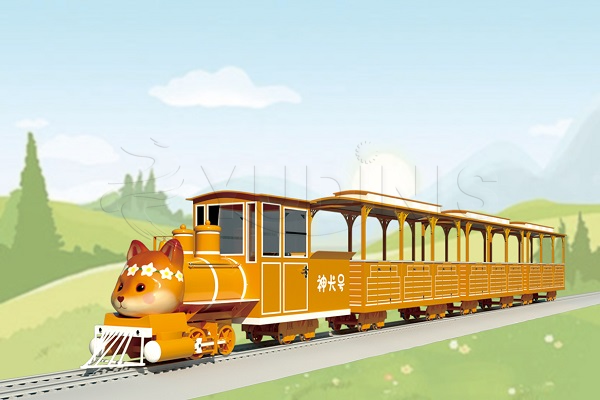
Buying a tourist train for a zoo or safari park is a long-term commitment: the vehicle will carry guests every day for years, and the route it serves will shape how visitors move through the site. The quality of the answers a buyer receives before the order is placed usually predicts the quality of the support that follows. This guide sets out what to ask a tourist train for zoos and animal parks supplier before signing anything.
Ask for the Route Analysis First
A serious supplier will want the route, not just the seat count. Provide the circuit length, gradients, surface type, number of stops and the hours the train will operate, then ask for a recommendation on train length, power source and gearing. If the supplier quotes a vehicle without asking those questions, the proposal is a catalogue extract rather than a project plan.
Vehicle Specification: Seats, Power and Comfort
Confirm how many passengers the train carries in normal use, how many of those seats are accessible for wheelchairs or pushchairs, and what the vehicle does on a hot day with a full load on a gradient. Ask directly about the battery capacity or fuel consumption, the expected range on your route, and what happens at the end of a long season with the pack or engine. Comfort details, including canopy coverage, step height and seat spacing, decide whether guests ride once or use the train all day.
Station and Platform Drawings
Ask for dimensional drawings of the platform, turning circle and boarding area before the design is finalised. Station geometry is where zoo projects most often go wrong, because a platform that suits a small park train may not fit a route with heavy wheelchair traffic. Comparing several train ride options for parks side by side is the quickest way to see how platform length and turning radius change with the vehicle size.
Safety, Certification and Spare Parts
Request the certification documents, the applicable design standards and the inspection intervals the vehicle will need. Ask which parts are expected to wear, how often they should be replaced and whether they are available locally. Understanding the way trackless train vehicles are engineered helps a buyer judge whether a proposal’s safety case is complete, because steering, braking and passenger restraint all depend on the vehicle architecture.
Delivery, Installation and Training
Agree the delivery schedule, the shipping method, the commissioning procedure and the training the drivers and mechanics will receive. Confirm who assembles the train, who tests it after assembly, and how long the manufacturer’s engineer stays on site. Ask what documentation will be handed over, including wiring diagrams, maintenance schedules and a parts list, because a park that cannot service the train without contacting the factory will lose operating days.
After-Sales Support and Fleet Growth
Finally, test the supplier’s commitment beyond delivery. Ask for the response time for spare parts, the cost of an on-site visit and how a second train would be added when attendance grows. A park that plans to expand should specify a zoo tourist train purchase that can share spares, tools and maintenance procedures with the units already in service. Support quality, not the lowest quotation, determines what the train actually costs per operating day.
Before ordering, force the supplier to engage with your route, your guests and your workshop. Ask for the route analysis, the full specification, station drawings, safety documentation, delivery and training plans, and a written after-sales commitment. Buyers can compare configurations with Dinis trains supplier and start from the models listed at https://www.dinistrains.com/zoo-train-rides-for-sale/.
Leave a Reply