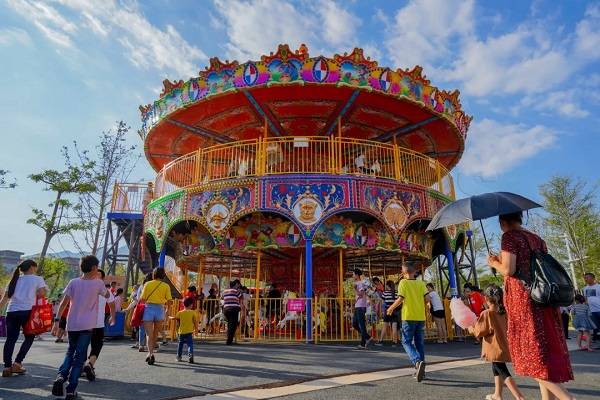
High-traffic theme parks have a capacity problem that family rides often cannot solve: a popular carousel quickly becomes a queue. A 68-seat double decker changes that equation by doubling riders per cycle and creating a landmark at the same time. This article explains whether a 68-seat double decker carousel for theme parks suits your park, and what to plan before ordering.
Capacity and Throughput
Sixty-eight seats per cycle is a substantial jump from a typical 24 or 36-seat carousel. With a cycle time of about three minutes including loading, the ride can serve over a thousand guests per hour in ideal conditions, which keeps waiting time stable through the afternoon peak. For parks where families queue at midday, that throughput is the strongest argument for the larger model. It is the clearest example of a high traffic double decker carousel earning its place.
Space, Height, and Structure
A double decker needs more than a bigger footprint: it requires clearance height, access stairs or ramps to the upper level, and foundations designed for the added weight and wind load. Confirm the site can accommodate the full structure with the safety clearance, queue, and maintenance access before you compare prices. Where space is tighter, a smaller format such as the 48 seats double decker carousel may fit the available area with less civil work.
Guest Appeal Across Age Groups
The upper deck gives children a sense of adventure, while the lower level remains accessible to grandparents and guests with limited mobility. That combination keeps the whole family on the ride together, which increases dwell time in the surrounding zone and supports food and retail sales nearby. Parks frequently report that the carousel becomes the family meeting point for the day, which encourages repeat rides later in the afternoon and evening sessions.
Queue Design and Guest Flow
Two boarding streams merge at the entrance, so queue design matters more than on a single-level ride. Provide a pre-boarding area, clear signage for each level, and a separate exit so that guests leaving do not cross those arriving. Wide platforms and trained attendants shorten loading time, which is what actually delivers the theoretical capacity.
Operating Costs and Maintenance
Power consumption, lighting maintenance, and decorative touch-ups scale with size, but the cost per rider usually falls because one operator team serves more guests. Plan an annual repainting and inspection budget, keep spare lamps and small decorative parts in stock, and schedule bearing and drive checks as part of the routine.
When a Smaller Carousel Is Better
If your park receives moderate daily traffic, has limited height clearance, or is planning an indoor installation, a smaller single-level carousel will deliver better returns. The 68-seat model is justified by sustained high attendance, not by ambition alone.
For busy theme parks with space and clear height, the 68-seat double decker is an excellent fit: high throughput, strong visual presence, and broad guest appeal. Work with an experienced Dinis carousel supplier China that provides clearance drawings and foundation data, and review general carousel construction practice when planning the installation. To compare capacities and request a quotation, visit https://www.carouselmanufacturer.com/product/68-people-double-decker-carousel/.
Leave a Reply