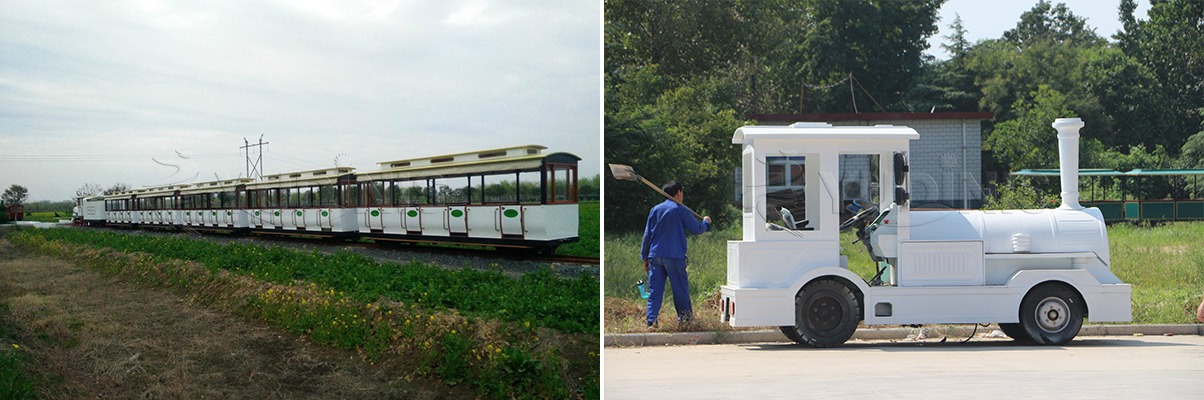
A farm amusement train shares its route with animals, tractors, feed deliveries and working staff. The route has to be safe for visitors and practical for the farm. This guide explains how to plan a farm amusement train route planning project around both.
Map the Working Areas First
Mark the barns, feed stores, animal pens, machinery routes and staff-only areas on the site plan. Include the movement patterns of livestock and the delivery times of feed trucks, not only the static areas. The tour route should avoid these zones during visitor hours, or cross them only at controlled points. A train that drives through a working yard creates a safety risk for everyone.
Design Safe Crossings
Where the tour route must cross a farm track, define the crossing with gates, mirrors and clear sight lines. Assign a staff member to control the crossing during busy periods, Use mirrors at blind corners and mark the crossing with a surface change, so both drivers and visitors notice it. Set a rule for tractors and visitors. A farm train route around animals should show every crossing and the priority rules on the drawing.
Keep Animals Calm
Noise and movement can disturb animals, especially during feeding or breeding periods. Route the train away from sensitive enclosures, or reduce speed and sound near them. Ask the farm manager about seasonal behaviour, especially during lambing or calving. Check the route with the farm manager, who knows the animals’ behaviour better than any plan.
Plan the Timetable Around Farm Work
The train should not need to cross a working area while a tractor is loading feed. Confirm the farm’s working hours, so the tour timetable does not overlap with the busiest periods. Reviewing the trackless train models for farms range shows how vehicle size and turning radius affect the route. General material on trackless train routing explains the operating constraints.
Train the Driver and the Farm Team
Give the driver a written map with the crossings and the emergency contacts. The driver needs to know the farm rules, the crossing points and the emergency procedure. The farm team also needs to understand the tour timetable, Leave a buffer between tours so a delayed tractor does not force the train to wait on the route. Make sure a tractor does not enter the route at the wrong moment. Hold a joint briefing before the season starts and repeat it when the route changes.
Review the Route After Opening
Finally, observe the route during the first busy week. Note where the train waits, where visitors look, and where the farm work is disrupted. Photograph the crossings and keep the images with the route map. Adjust the route or the timetable before the pattern becomes fixed.
A farm train route works when the working areas, crossings, animals, timetable, driver training and review are planned together. Safety for visitors and productivity for the farm both matter. Operators can review the range from Dinis farm route planning team and start from the product page at https://www.dinistrains.com/farm-amusement-trains-for-sale/.
Leave a Reply